The handle is one of the first parts of a bedside pedestal a customer touches, yet it is often treated as a small styling detail. It affects how the drawer is opened, how much the front projects into the bedside space and what needs cleaning. For South African furniture stores comparing bedroom ranges, a short hands-on demonstration can explain these differences more clearly than the word modern.
This comparison describes three opening approaches. It does not mean that every pictured pedestal is available with all three. Changing a handle or moving to push-to-open can require different fronts and hardware, so the supplied configuration must be confirmed for the selected product.
A visible pull gives the hand a clear starting point
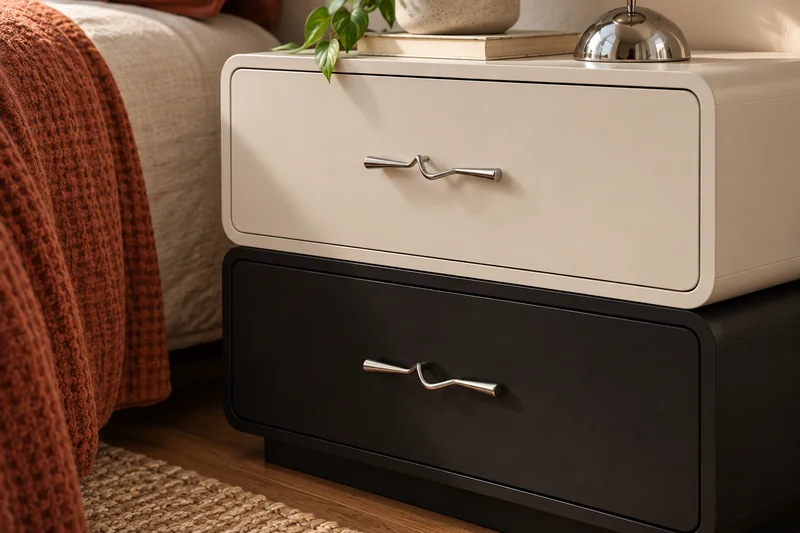
A knob or pull shows customers where to grip the drawer. Try it with the pedestal at its normal bedside height, using the drawer as it would be used from bed. Check the space between the pull and the front, the edges felt by the fingers and whether the finish is comfortable to touch. A visually slim pull may provide less usable finger space than expected.
Record how far the handle projects beyond the front. In a narrow bedroom, that projection can matter when walking past the pedestal or opening a nearby wardrobe. The cabinet body's depth alone will not capture it. Check the sample from the usual walking direction rather than judging only a front-facing photograph.
Recessed grips still need enough access
A recessed grip or shaped drawer edge can reduce protruding hardware. The grip position, however, may be less obvious to a first-time user. Ask someone unfamiliar with the sample to open it without a demonstration. Notice whether they naturally find the intended grip or pull at an unsuitable part of the front.
Inspect the recess for comfortable edges and access for cleaning. Its shape should be evaluated on the actual material and finish: a photograph cannot show how a finger contacts the surface. A recessed grip is also not the same as a handleless push mechanism. Keep those descriptions separate in shop labels and online listings.
Push-to-open depends on the complete mechanism
With a push-to-open design, the opening action comes from a fitted mechanism rather than a visible handle. Ask the supplier to identify how it operates and whether any closing or damping function is included. Do not assume that every flat drawer front opens by pressing it, or that a push-to-open mechanism automatically includes soft closing.
Test the approved sample several times in its intended position, following its instructions. Check whether the front returns to the correct alignment and whether the required pressing point is easy to understand. Finger marks may be more visible on some finishes, so try the normal care method on an approved test area. Avoid advertising the system as maintenance-free without evidence.
Compare with the same everyday load
Use the same modest set of objects when comparing samples, remaining within any stated limits. An empty drawer can feel different from one containing normal bedside items. Observe access to the back, any uneven movement and whether the handle remains comfortable throughout the opening action. A heavy pull is not automatically strong, and a light action is not proof of a higher load rating.
If the customer has a particular grip or movement requirement, invite them to try the actual sample. Do not label an entire handle type universally accessible from its appearance. The height of the pedestal, the drawer movement and the user's position all contribute to the experience.
Make the handle part of the spare-parts record
For a visible pull, record the fixing arrangement and the relevant measurements, including hole spacing where applicable. Keep a photograph of the back of an approved spare component if available. A replacement with a similar appearance may not fit the same holes. Do not recommend drilling new holes without a manufacturer-approved repair method.
Our article on durable structure and spare-parts planning explains why the component reference should stay attached to the model record. Ask how the supplier will communicate a handle or mechanism change before a repeat order reaches different store branches.
Protect protruding parts during delivery
Confirm whether handles arrive fitted or are packed separately. If assembly is required, the hardware count and instructions should be clear. If fitted, the packaging needs to accommodate the projection without transferring force through the handle to the drawer front. Do not infer packaging suitability from the appearance of a showroom sample.
The guidance on store display and delivery protection helps connect this small component to the complete customer experience. An attractive pull that arrives loose, missing or damaged changes the impression of the whole pedestal.
Three mechanisms require three separate samples
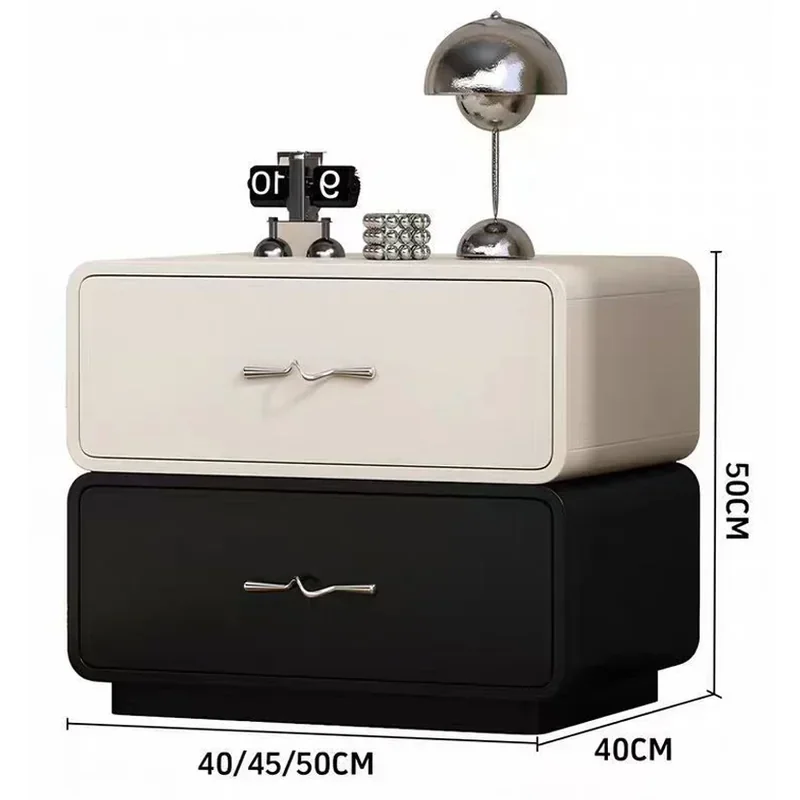
The pictured pedestal confirms the visible wave-shaped pulls only. It is not evidence that this SKU has a recessed grip or push-to-open hardware. For a store comparison, photograph each confirmed sample once closed and once opened, record the force and hand position needed, then ask for its runner, catch and spare-part codes. A no-handle front is not by itself proof of a push latch.
Build a useful three-minute store demonstration
Show the customer where to grip or press, let them open the drawer, and point out the actual projection into the bedside space. Then explain the supplied opening function and care instructions without adding unverified performance claims. A simple record of repeated customer questions can show whether the range needs clearer product information or a different opening option.
For a private-label bedroom furniture enquiry, include the preferred opening method, finish and replacement-parts expectations. Request an actual sample of the proposed configuration. The handle should earn its place through comfortable daily use and repeatable supply, as well as the way it looks beside the bed.